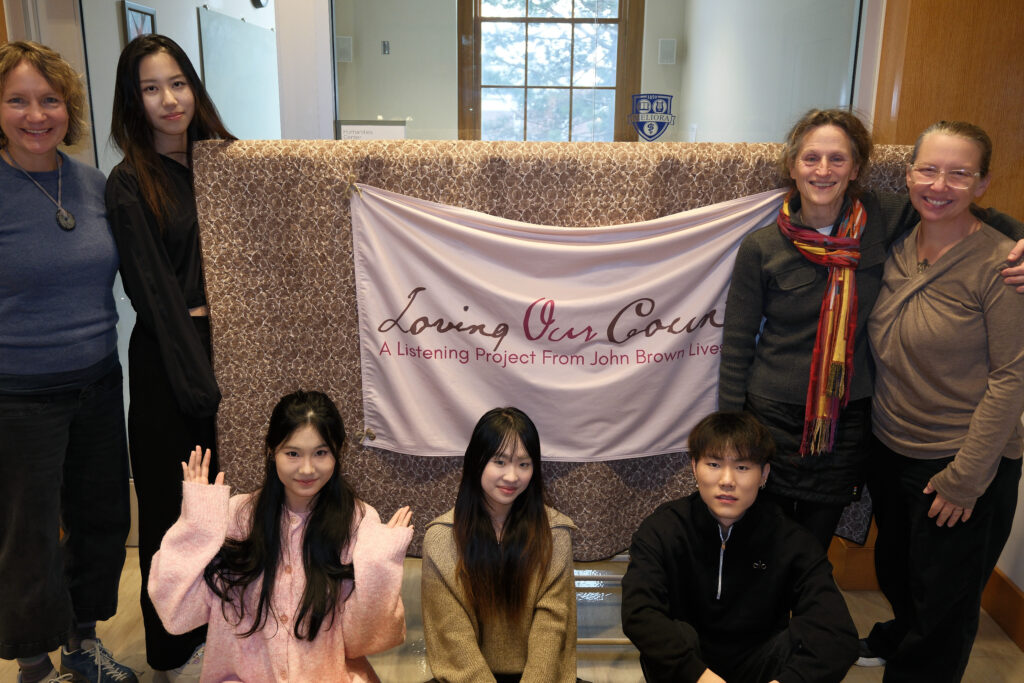
Loving Our Country
Our project is a community-centered civic storytelling initiative. It was built in response to the growing social and political divisions across New York’s 21st Congressional District by creating spaces where residents can share their personal experiences of belonging, identity, community change, and civic life. At a time when many feel disconnected from institutions and from one another, we hope this project can help rebuild trust through listening, honest conversation, and shared understanding.
The Challenge
Since the 2020 election, many communities across upstate New York have experienced growing political and geographic divisions. Trust has weakened, collaboration has become more difficult, and many residents feel disconnected from institutions and from one another.
Our Vision & Project Video
We hope to create a sustainable model of civic listening that can continue beyond this project and inspire similar efforts in other communities.
Check the video to learn more about the listening session details.
Our Response
We bring together community storytelling, research, design, and public engagement through five key areas:
We hosted our pilot listening session at the University of Rochester, where students shared reflections on belonging, identity, and community life. Building from that foundation, we later conducted listening sessions and interviews in Watertown to engage local residents and gather a broader range of perspectives across NY-21.
We developed this website that curates audio clips, transcripts, photographs, and key insights from our sessions. This platform serves as both a storytelling archive and a civic learning resource for students, educators, policymakers, and community members.
All project materials are created with accessibility in mind, including captions, clear visuals, alt-text, and thoughtful communication practices. We also aim to support multilingual participation so that more voices can be included in the conversation.
We analyze stories and interviews to identify recurring themes such as belonging, safety, representation, identity, and opportunity. These insights help communities and leaders better understand how people experience civic life in different ways.
https://rochester.app.box.com/s/ge1uittn1zozhko0z0mdh9w8gku20z97/file/2031357316108
The field guide turns our experience into a reusable model. It helps future teams understand what worked, what could be improved, and what protocols should be followed when conducting similar community-based listening sessions.
https://rochester.box.com/s/1juf6zkhcmr70amdwzn4u2dmm10z6wk6
Why Stories Matter?
A story can help others understand what data alone cannot: how people feel, what they fear, what they hope for, and what connection means in everyday life. By preserving these stories, we create resources that can inform educators, community leaders, and future civic initiatives.
Why is listening important?
Listening creates space for people to feel heard and respected. When people know their voices matter, it can build trust, reduce misunderstanding, and strengthen relationships within communities.
What kinds of stories are shared?
Participants may reflect on belonging, identity, community change, civic life, care, hope, or personal experiences that shape how they see their communities.
What makes this project different?
Rather than focusing on debate or polarization, this project centers listening. We believe meaningful civic engagement begins by understanding one another first.